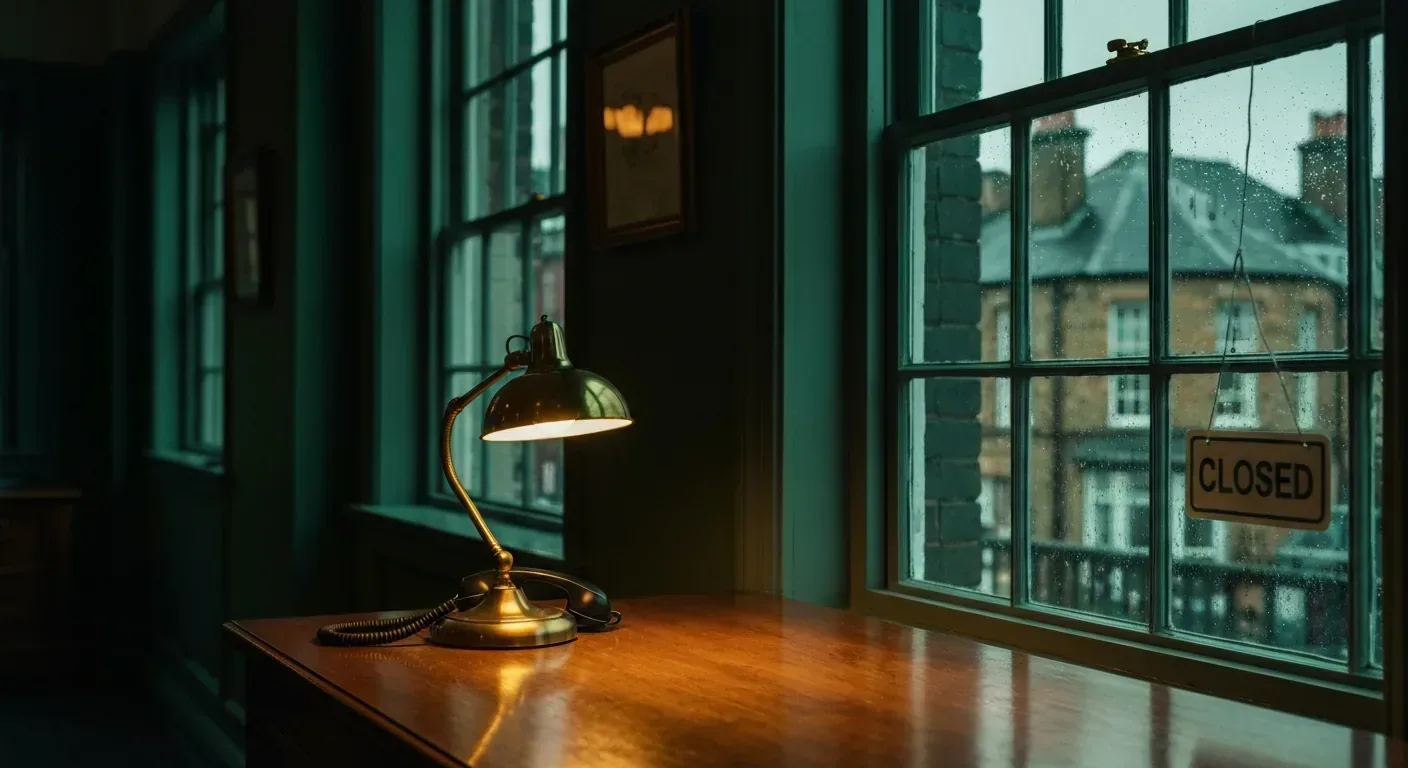
An AI receptionist after hours UK setup answers and resolves calls between 18:00 and 09:00 weekdays plus the entire weekend — roughly 65% of the calendar week. Around 30% of inbound business calls in the UK land outside 9-to-5 hours, and the FSB has documented that small businesses miss around 22% of calls overall. A domain-trained AI receptionist closes that gap without overnight staff, without paying unsocial-hours premia, and without the morning callback queue that costs you live deals.
This is the practical version. What gets answered, what gets escalated, and what stays human.
Why after-hours call capture matters more than UK SMBs admit
After-hours — 18:00 to 09:00 weekdays plus weekends and bank holidays — represents 65% of the seven-day calendar week. A business answering only during 9-to-5 cover is unreachable for most of the week its customers are alive.
Ofcom's 2024 Communications Market Report confirmed UK voice traffic still skews heavily into evenings and weekends. The Federation of Small Businesses estimates UK SMBs miss around 22% of inbound calls on average. A caller who reaches voicemail at 19:45 frequently does not call back — they Google the next provider in the SERP and ring them. The economics no longer hold for any SMB where the phone is a revenue channel: dental practices, legal firms, lettings agencies, translation agencies, trades, and consultancies all bleed live enquiries to voicemail every evening the line is unattended.
What an AI receptionist actually does between 18:00 and 09:00
Between 18:00 and 09:00 a properly configured AI receptionist does what it does at 11:30 on a Tuesday: answer in your business name, qualify the caller, quote live pricing where appropriate, book a slot in your calendar, escalate genuine emergencies, and write a complete call summary into your CRM.
The behavioural change is the routing logic. During business hours, an unanswered call may roll to a human team member's mobile. Out of hours, that fallback is gone — the operator becomes the front door rather than the safety net. A useful after-hours configuration includes live booking against your real calendar; a defined emergency-escalation tree to the on-call partner; a non-emergency message bucket that flows into the morning queue; and an automated email summary so the caller has written confirmation. The ICO's guidance on telephone communications reinforces that recorded inbound calls must be processed lawfully — which a managed setup handles for you. The point of after-hours cover is not "answering." It is resolving.
The four after-hours configurations UK SMBs typically choose
Not every business needs the same overnight behaviour. There are four sensible configurations, each with different cost and risk implications.
| Configuration | What happens out of hours | Suitable for | Indicative cost |
|---|---|---|---|
| Voicemail only | Caller leaves a message; nobody hears it until 09:00 | Trades with no genuine after-hours risk | £0/mo direct, ~22% missed-call loss |
| Pager / on-call mobile | Calls forwarded to owner's mobile 24/7 | Solo practice, single-location consultancy | £0–£40/mo + owner sleep |
| Live AI receptionist (always-on) | Same behaviour as daytime: answer, qualify, book, escalate | Most UK SMBs from sole trader to mid-size | £99–£1,497/mo per pricing tier |
| AI + human-team escalation | AI handles routine; genuine emergencies forwarded to a real human | Legal, medical adjacent, complex services | £497–£1,497/mo |
The third configuration — live AI receptionist running 24/7 — is the default UK SMB choice in 2026. It costs less than two evenings of human cover from a UK answering service, runs every night, and resolves rather than records. The fourth tier matters when there is a genuine clinical-adjacent or legal-deadline reason for live human escalation. Cost transparency lives at the AI receptionist cost UK page.
What gets escalated overnight — and what does not
A call at 22:30 from someone asking opening hours is not an emergency. A call at 22:30 from a property landlord saying the boiler has burst is. The escalation logic is what separates a useful after-hours setup from a glorified voicemail.
A working configuration has three lanes. Resolve in-call: routine bookings, pricing enquiries, qualified lead capture — handled directly without anyone being woken up. Send to morning queue: complex enquiries that need owner judgment but can wait — emailed, summarised, prioritised by urgency. Escalate live: defined emergency triggers — burst pipes for a maintenance firm, urgent legal deadlines for a solicitor, dental pain triage — forwarded to the on-call number with a 30-second handoff briefing. The keyword is "defined." If the trigger list is vague, every call escalates. If too narrow, you miss the call you needed to take. Defining that list during the build is the single most important after-hours configuration choice.

How to set up an AI receptionist after hours UK without losing weekends
Setup takes about 14 days from contract for a managed domain-trained operator. The sequence: audit existing call recordings to identify after-hours patterns, map escalation triggers, integrate with calendar and CRM, write call scripts in your voice, run silent test calls, then go live with weekly review for the first six weeks.
It takes 14 days rather than 14 minutes because after-hours cover only works if the routing matches your actual business. A solicitor's escalation tree is different from a dentist's, which is different from a property agency's. Eldris Voice deployments treat after-hours as the most-tested configuration because it is the most consequential. A daytime call that goes wrong is repairable while you are at your desk. An overnight call that goes wrong has been wrong for ten hours before you find out. The preparation pays for itself the first weekend a £4,000 enquiry lands at 21:00 on a Saturday and is qualified, booked, and confirmed before you have finished dinner.
After-hours and the cost of doing nothing
The cost of doing nothing is rarely the absence of payment — it is the absence of the call you never knew you missed. Voicemail does not log abandoned calls the way a managed operator does, which is why most UK SMBs underestimate their out-of-hours pipeline by 30-50%.
A managed AI receptionist provides full analytics: every after-hours call answered, every caller's stated need, every enquiry resolved or escalated. Within four weeks, most SMBs discover their after-hours volume is materially higher than they assumed. The cost comparison against a human receptionist sits in the AI vs human receptionist cost analysis. The ONS Annual Survey of Hours and Earnings puts a permanent overnight rota at £55,000+ all-in annually.
See it in action
Call the live demo line → 020 3769 0881
No form. No gatekeeper. Call it at 23:00 and ask it anything.
Frequently asked questions
Does an AI receptionist work after hours UK?
Yes — and after-hours is where it earns its keep. A live AI receptionist runs the same routine at 23:30 as at 11:30: answers in your business name, qualifies the caller, books appointments, and escalates genuine emergencies to your on-call number. The domain-trained tier handles UK accents, multilingual callers, and complex service enquiries that voicemail cannot. The point is resolution rather than recording.
What does after hours mean for UK SMBs?
After hours covers 18:00 to 09:00 weekdays, all of Saturday and Sunday, plus all eight England-and-Wales bank holidays — roughly 65% of the calendar week. A business answering only during 9-to-5 cover is unreachable for most of the time its customers are awake, and around 30% of inbound calls land outside core hours per Ofcom voice traffic data.
Will it wake me up at 3am for a routine question?
Not if escalation is configured properly. Routine questions get resolved during the call. Non-emergency complex enquiries flow into a morning queue. Only defined emergency triggers — burst pipes, dental pain triage, hard-deadline legal matters — escalate to your mobile in real time. Defining that trigger list during the 14-day build is the most important after-hours choice you make.
How much does an after hours AI receptionist cost UK?
UK pricing in 2026 ranges from £99/month at the commodity tier through £300–£900/month for no-code SaaS to £497–£1,497/month for a managed domain-trained operator. The managed tier includes live booking, escalation routing, weekly gap-fill, and analytics. A single human after-hours overnight rota costs £55,000+ per year per ONS earnings data once unsocial-hours premia are applied.
Can it handle non-English callers overnight?
Yes — at the multilingual tier. ONS data shows 9.2 million people in England and Wales have a first language other than English, and many will not adjust their calling time to a 9-to-5 English window. A managed multilingual AI receptionist handles six languages with mid-call switching. Detail in the multilingual AI receptionist UK setup.
Sources
The outside sources this article cites, in the order they appear.
- 2024 Communications Market Report · ofcom.org.uk
- ICO's guidance on telephone communications · ico.org.uk
- Annual Survey of Hours and Earnings · ons.gov.uk
Read Eldris Voice first in Google results:
Hear it for yourself
Call the live demo line.
The fastest way to judge an AI receptionist is to ring one. Ask about pricing, ask about languages, ask it to qualify you. You will be speaking to an AI receptionist. Eldris Voice costs from £497 a month plus a one-off setup fee.
Talk to a person: [email protected]